Fishing in Estonia – Popular Fish Species
SEA TROUT
A prized and highly sporting migratory fish.
Sea trout fishing
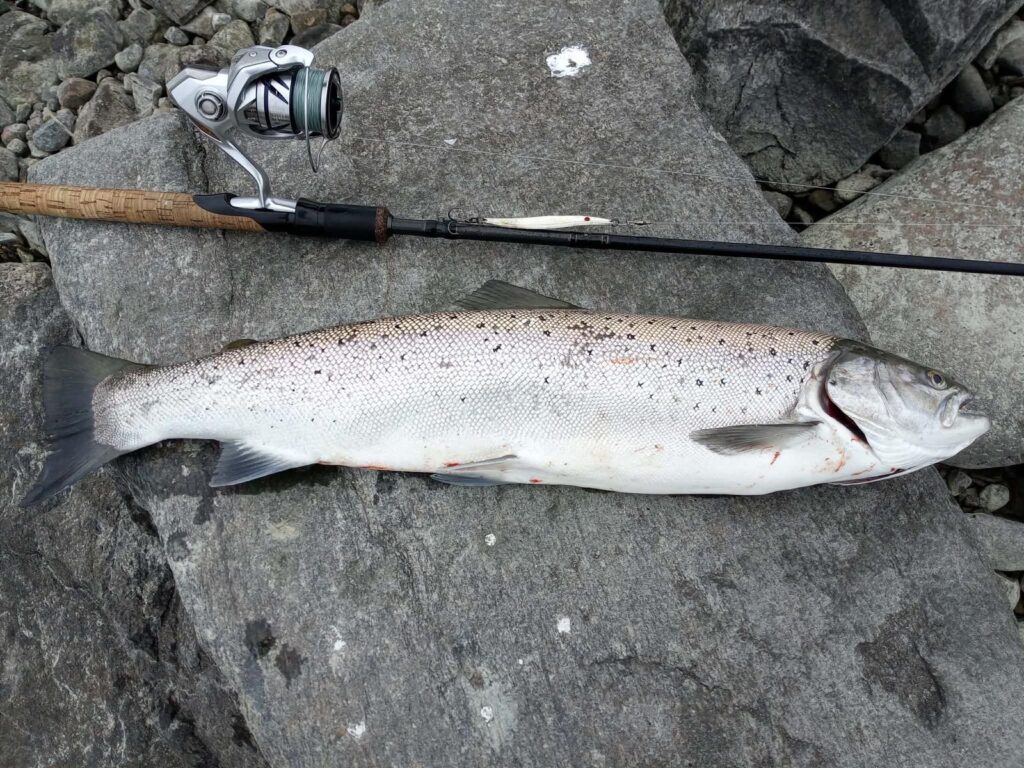
Sea trout can be found along rocky and gravelly coastlines, headlands, and shallow bays. The best fishing season is usually in spring and autumn, when the weather is often more favorable and cooler. Sea trout are mainly caught by spinning, using metal lures, wobblers, or silicone baits, although they can also be caught from a boat in deeper coastal waters
Sea trout fishing is usually done with a longer spinning rod (2.7–3 m) and a strong reel. Suitable line strength is around 10–40 g, and braided line is commonly used together with fluorocarbon leaders. In Estonia, sea trout fishing is regulated seasonally, especially during spawning periods, so it is important to always check the current fishing regulations before fishing.
GARFISH
A popular spring sport fish with a long, sharp beak.
Garfish fishing
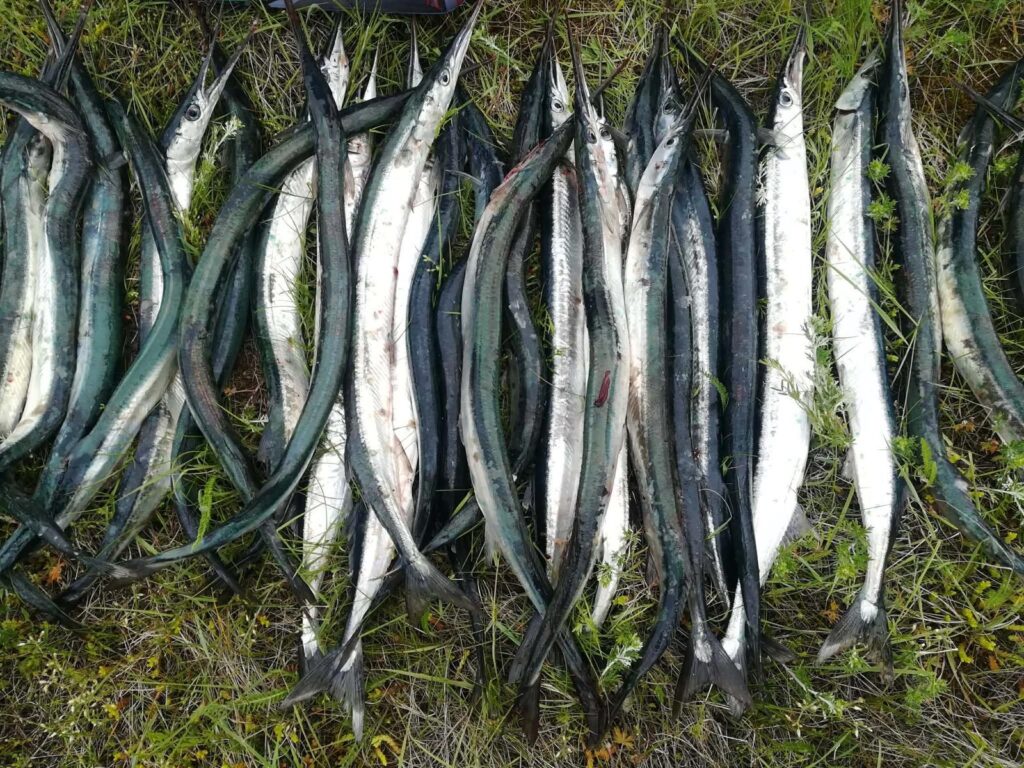
Garfish are mainly caught in May and June, when they come into coastal waters to spawn. They are most commonly found along the coasts of Western Estonia and the islands, but also in the Gulf of Finland. Garfish prefer shallower and warmer waters and often move in schools. They are usually caught by spinning from the shore or from a boat using smaller lures, specialized garfish rigs, or even float tackle with pieces of shrimp or fish.
Light or medium-class spinning rods (2.4–3 m) are suitable for garfish fishing, especially from the shore. Thinner monofilament or braided line is commonly used, as garfish are strong fighters despite their slender bodies and are known for their fast jumps. Garfish meat is tasty and appreciated, and one of its unique characteristics is its green-colored bones, which are completely natural and do not affect the taste.
Pike
Estonia’s most popular predatory fish.
Pike fishing
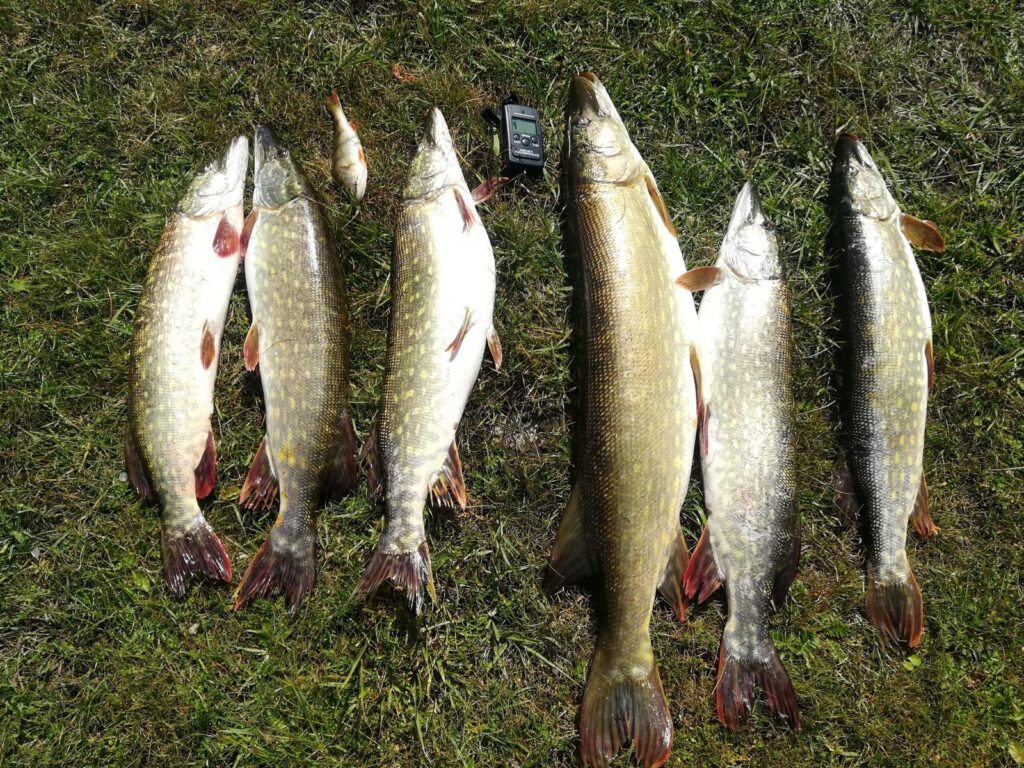
Pike are active in shallow waters during spring, while in summer they move to deeper and cooler areas. In autumn, they feed actively before winter, making it one of the best seasons for pike fishing. The best fishing spots include reed edges, shorelines with aquatic vegetation, and deeper drop-offs. Pike are mainly caught by spinning using different types of lures, or by float fishing with live bait in winter under the ice.
Medium or heavy-class spinning rods are commonly used for pike fishing, together with metal or fluorocarbon leaders, as the pike’s sharp teeth can easily bite through regular fishing line. Strong landing nets and pliers are also recommended for safely handling the fish. Before fishing, it is important to check the current fishing regulations and minimum size limits, and to be cautious of the pike’s sharp teeth.
ZANDER
A highly valued fish.
Zander fishing
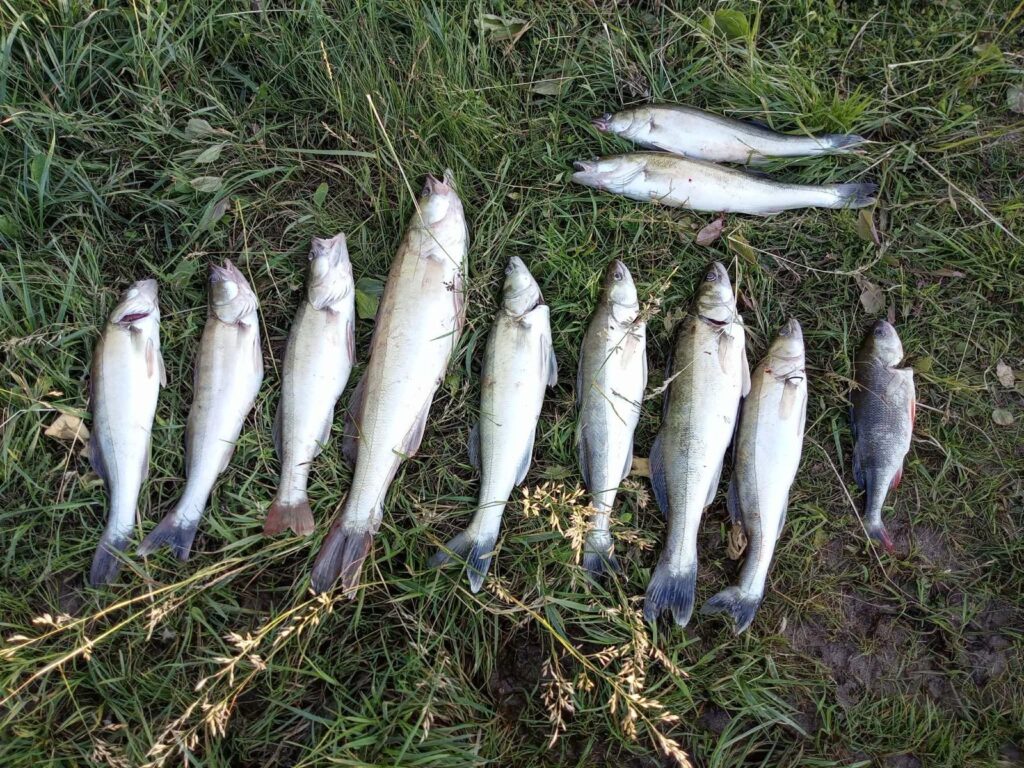
Zander can be found in deeper lakes, river channels, and areas around rocks and underwater structures. The best fishing season is from spring to autumn, especially in the evening and at night when the fish are most active. Zander are most commonly caught by spinning with silicone lures or wobblers, as well as by bottom fishing or vertical jigging from a boat in deeper areas.
Medium-power spinning rods (with a casting weight of 10–40 g) and sensitive braided line are commonly used for zander fishing to better detect lure movement and bites. Fluorocarbon or thinner leaders are often used. Before fishing, it is important to check the current minimum size limits and fishing restrictions, especially during the spawning season.
PERCH
Agile and schooling fish.
Perch fishing
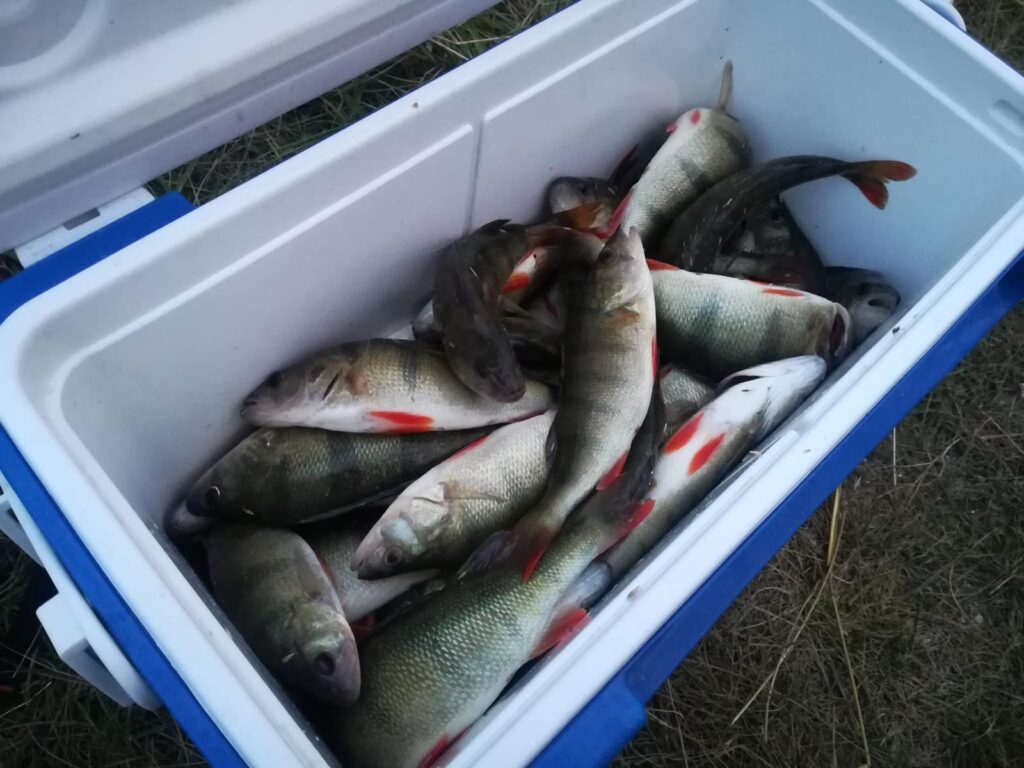
Perch can be found near lake shorelines, reed beds, and around underwater rocks and fallen trees. They are caught throughout the open-water season, especially in spring and autumn when they are most active. Perch are usually caught by spinning with small lures, float fishing with worms, or jigging, and in winter they are commonly caught through the ice.
Light or medium spinning rods (with a casting weight of 5–20 g) and thin monofilament or braided line are suitable for perch fishing. Small and brightly colored lures are commonly used. Perch have no minimum size limit, but it is still important to check current fishing regulations and daily catch limits before fishing.